Can stress cause gallstones?
It is a question I am asked more often than you might expect. Patients who have been diagnosed with gallstones frequently want to understand why and stress is often at the top of their list of suspects. Life has been difficult, work has been relentless, sleep has suffered. Could that really have contributed? The honest answer is: possibly, yes — though not always in the way people assume.

What are gallstones?
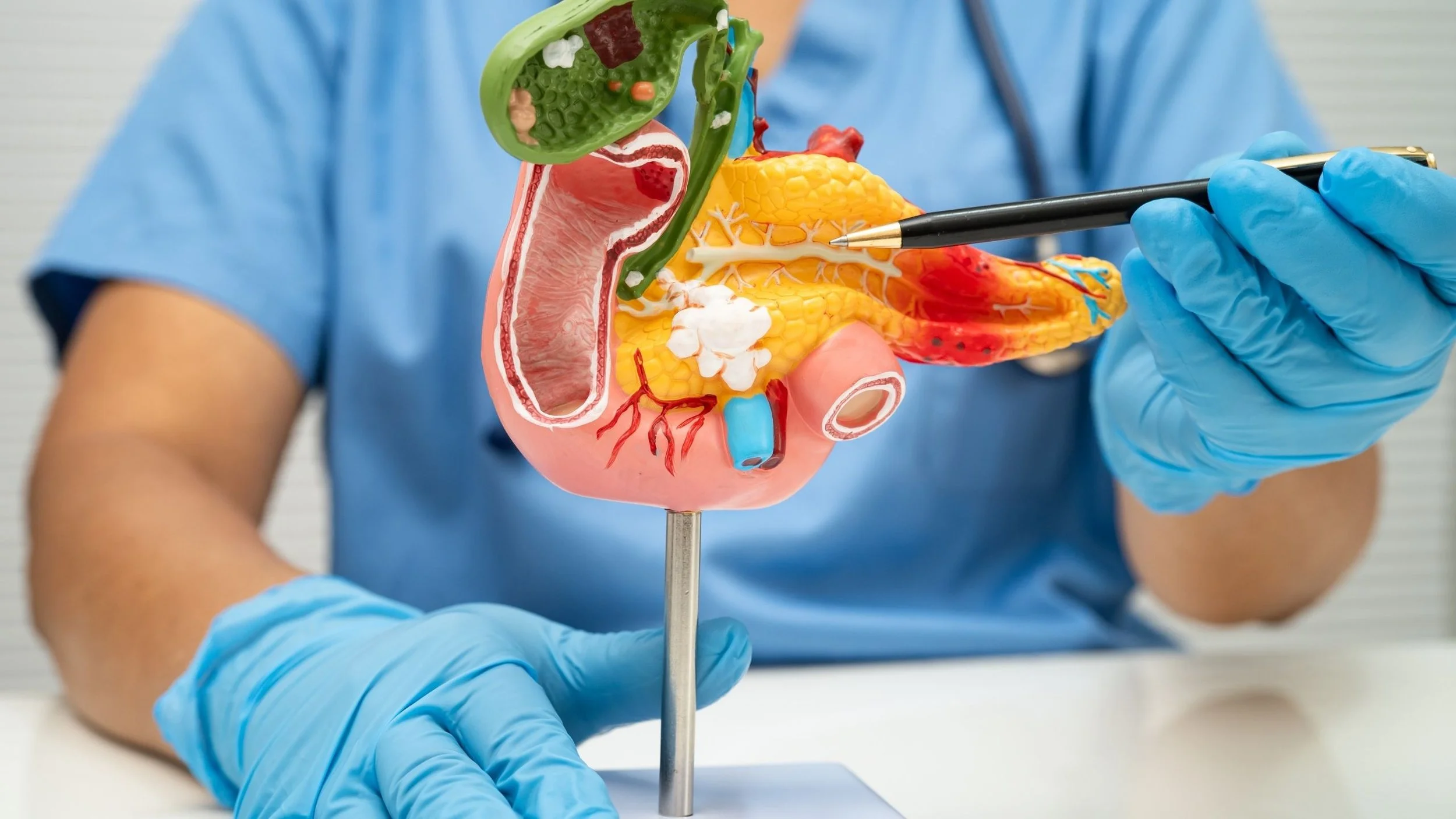
Gallstones are solid deposits that form inside the gallbladder, a small organ that sits beneath the liver and stores bile. Bile is produced by the liver to help digest fats, and it passes through the gallbladder on its way to the small intestine.
Gallstones form when the chemical balance of bile is disrupted, most commonly when bile contains too much cholesterol, which crystallises and gradually builds into stones. They range in size from a grain of sand to a golf ball, and can exist for years without causing any symptoms at all.
The known risk factors
Before exploring stress specifically, it helps to understand the well-established risk factors for gallstone disease:
Being female as oestrogen increases cholesterol in bile and slows gallbladder emptying
Being over 40
Obesity or being overweight
Rapid weight loss or very-low-calorie diets
Pregnancy
A family history of gallstones
Certain medications, including some contraceptives and hormone replacement therapy
Diabetes
A diet high in refined carbohydrates and low in fibre
These factors are well-supported by evidence. Stress is less straightforward but there is a growing body of research worth taking seriously.
So, can stress cause gallstones?
Chronic stress affects the body in ways that are relevant to gallstone formation. There are two main mechanisms worth understanding.
Stress and cortisol
When the body is under prolonged stress, it produces elevated levels of cortisol, the primary stress hormone. Sustained high cortisol levels have been shown to affect cholesterol metabolism, increasing the amount of cholesterol secreted into bile. This creates the kind of bile composition that is more likely to form stones.
Stress and gallbladder motility
The gallbladder needs to contract regularly and empty effectively to prevent bile from becoming stagnant. When bile sits still for too long, the conditions for stone formation are more favourable.
Stress (particularly chronic stress) is known to affect gut motility, including the movement of the gallbladder. The gut-brain axis, the communication network between the nervous system and the digestive tract, plays a significant role here. Stress signals from the brain can slow gallbladder emptying, contributing to bile stasis and increasing the risk of stone formation over time.

Stress and lifestyle
There is also an indirect relationship worth acknowledging. Chronic stress frequently leads to the kind of lifestyle and dietary patterns that independently increase gallstone risk, such as poor sleep, irregular eating, a diet high in processed foods, reduced physical activity, and in some cases significant weight fluctuation. These factors compound one another.
What the research says
Studies have found associations between psychological stress and gallstone disease, though establishing direct causation in humans is complex. Research published in gastroenterology journals has identified links between stress-related hormonal changes and altered bile composition. Animal studies have demonstrated more directly that chronic stress accelerates gallstone formation. The picture is not yet complete, but the biological mechanisms are plausible and supported by emerging evidence. Stress is unlikely to cause gallstones in isolation — but in someone who already has other risk factors, it may well be a contributing factor.
What should you do if you think stress is affecting your health?
If you have been diagnosed with gallstones and are under significant stress, it is worth addressing both. Managing stress through regular physical activity, adequate sleep and (where appropriate) professional support is beneficial for overall health and may reduce the compounding effect on gallbladder disease.
If you have not yet been diagnosed but have upper abdominal pain, particularly after meals, nausea, or symptoms that come and go, especially during periods of high stress, it is worth getting assessed. Gallstones are straightforwardly diagnosed with an ultrasound scan and, if symptomatic, are very effectively treated.
When does treatment become necessary?
Many people live with gallstones without ever needing treatment. However, if gallstones are causing recurrent symptoms (pain, nausea, bloating) or if complications arise such as infection or bile duct obstruction, treatment is usually recommended.
The standard treatment for symptomatic gallstone disease is laparoscopic cholecystectomy (keyhole removal of the gallbladder). It is one of the most commonly performed operations in the UK, is safe and well-established, and most patients return to normal activity within two weeks.
Stress alone is unlikely to be the sole cause of your gallstones. But the relationship between chronic stress, cortisol, bile composition and gallbladder function is real, and it is reasonable to consider stress as a contributing factor, particularly alongside other risk factors. If you are experiencing digestive symptoms and have been under sustained pressure, take them seriously. Early assessment is straightforward and provides clarity, whatever the cause turns out to be.