Driving after hernia surgery
It is one of the most practical questions patients ask before hernia surgery and one of the most important for getting back to normal life. Whether it is the school run, the commute, or simply the independence that comes with being able to drive, most patients want to know how soon they can get back behind the wheel. The answer depends on a few factors, and it is worth understanding them properly rather than guessing.

Why can't you drive straight after hernia surgery?
There are two distinct reasons why driving is restricted after surgery, and it is important to understand both.
Anaesthetic and medication: For the first 24 to 48 hours after a general anaesthetic, driving is not permitted under any circumstances. Anaesthetic affects reaction times, concentration and judgement, even when you feel fine. The same applies to strong pain relief such as opioid-based medications. If you are taking anything stronger than standard paracetamol or ibuprofen, you should not drive. This is not simply medical guidance, driving under the influence of anaesthetic or sedating medication is a legal issue. Your insurance would also be invalidated.
Physical ability to drive safely: Beyond the effects of anaesthetic, the more relevant question for most patients is whether they are physically capable of driving safely and this takes a little longer to assess.
To drive safely, you need to be able to:
Perform an emergency stop without hesitation or pain
React quickly to hazards
Sit comfortably in a driving position for a sustained period
Move your legs freely for clutch and brake control
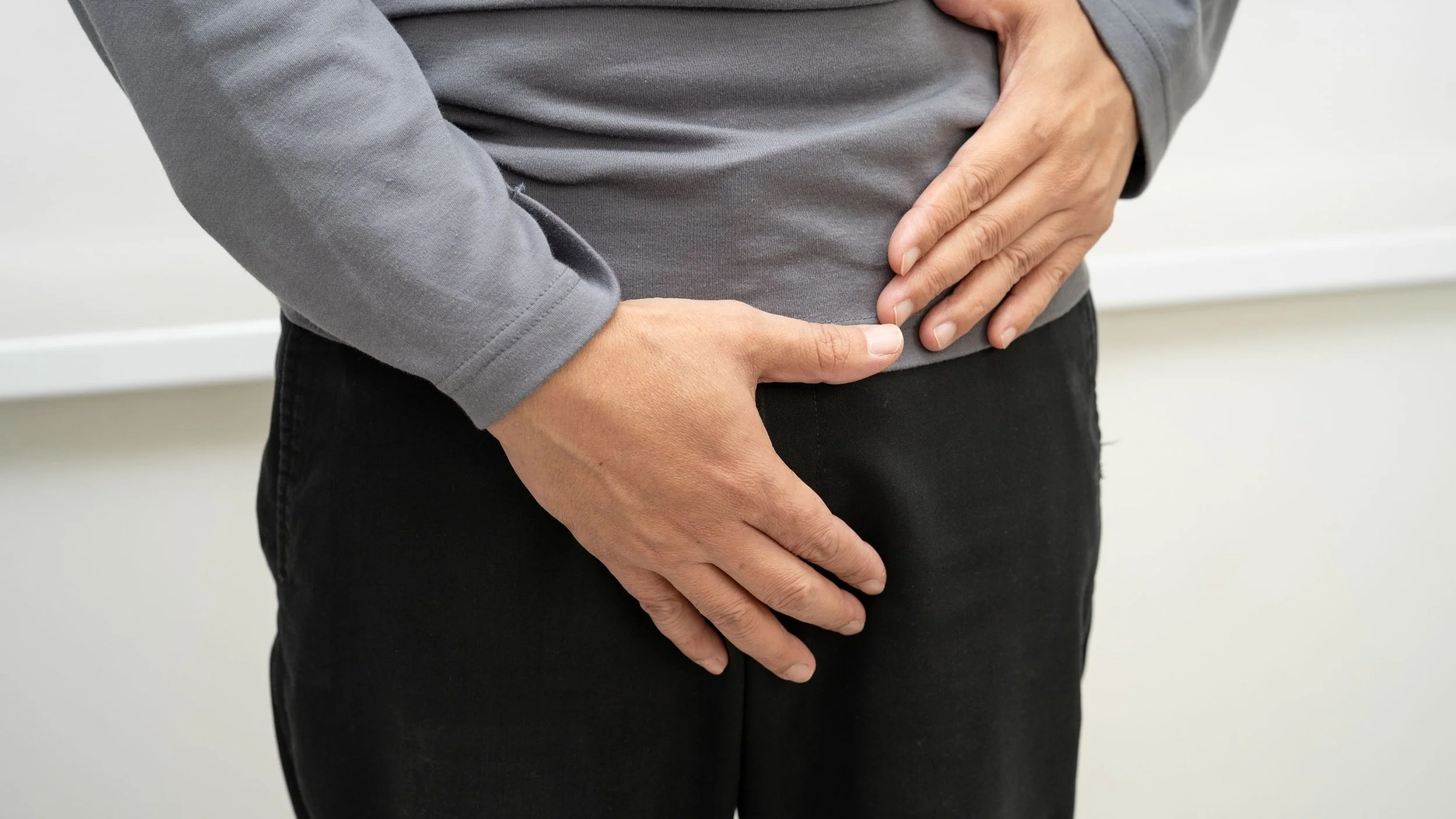
After hernia repair, discomfort around the repair site, particularly with sudden movements, can compromise all of these. Until you can do all of the above without pain or hesitation, it is not safe to drive.
How long does this typically take?
For most patients who have had a straightforward laparoscopic (keyhole) hernia repair, the ability to drive safely returns within one to two weeks. This is a guide rather than a rule, individual recovery varies, and the size and location of the hernia, the type of repair, and your overall fitness all play a role. Open hernia repair, which involves a larger incision, typically requires a longer recovery period before driving is appropriate (usually two to four weeks, sometimes longer). The most important test is not the calendar. It is whether you could perform an emergency stop comfortably and without hesitation. If the answer is no, it is too soon.
Does it matter what type of hernia I had?
To some extent, yes.
Inguinal hernia (groin) — the most common type. After keyhole repair, most patients are comfortable driving within one to two weeks. The location of the repair means that pedal use and seat belt positioning can cause discomfort in the early days.
Umbilical or incisional hernia — recovery timelines are similar for keyhole repairs, though larger incisional hernias repaired openly may take longer.
Hiatus hernia — this is a different type of hernia involving the stomach and diaphragm, and does not involve the abdominal wall. Recovery considerations are different and will be discussed specifically with your surgeon.
What about insurance?
Your car insurance policy requires you to be fit to drive. If you drive before you are medically fit to do so, regardless of how you feel, and you are involved in an accident, your insurance may be invalidated. There is no formal DVLA restriction on driving after hernia surgery, but the responsibility lies with you to be confident that you are safe. If you are in any doubt, do not drive and speak to your surgical team.
Practical tips for returning to driving
Before getting behind the wheel:
Try sitting in the driving seat at home first — can you get in and out comfortably?
Practise pressing the brake and clutch firmly — is there any pain or restriction?
Simulate an emergency stop whilst stationary — does it cause discomfort?
Make sure you are off all sedating pain relief
Start with a short, familiar journey rather than a long drive
If any of these reveal discomfort or hesitation, give it a few more days.
When should you contact your surgeon?
Most patients recover without any issues. However, contact your surgical team if you experience:
Increasing pain around the repair site rather than gradual improvement
Swelling, redness or discharge from the wound
Fever above 38°C
A feeling that something has changed at the repair site — a new lump or a return of the original bulge